Tula:
Encouraging Young Readers
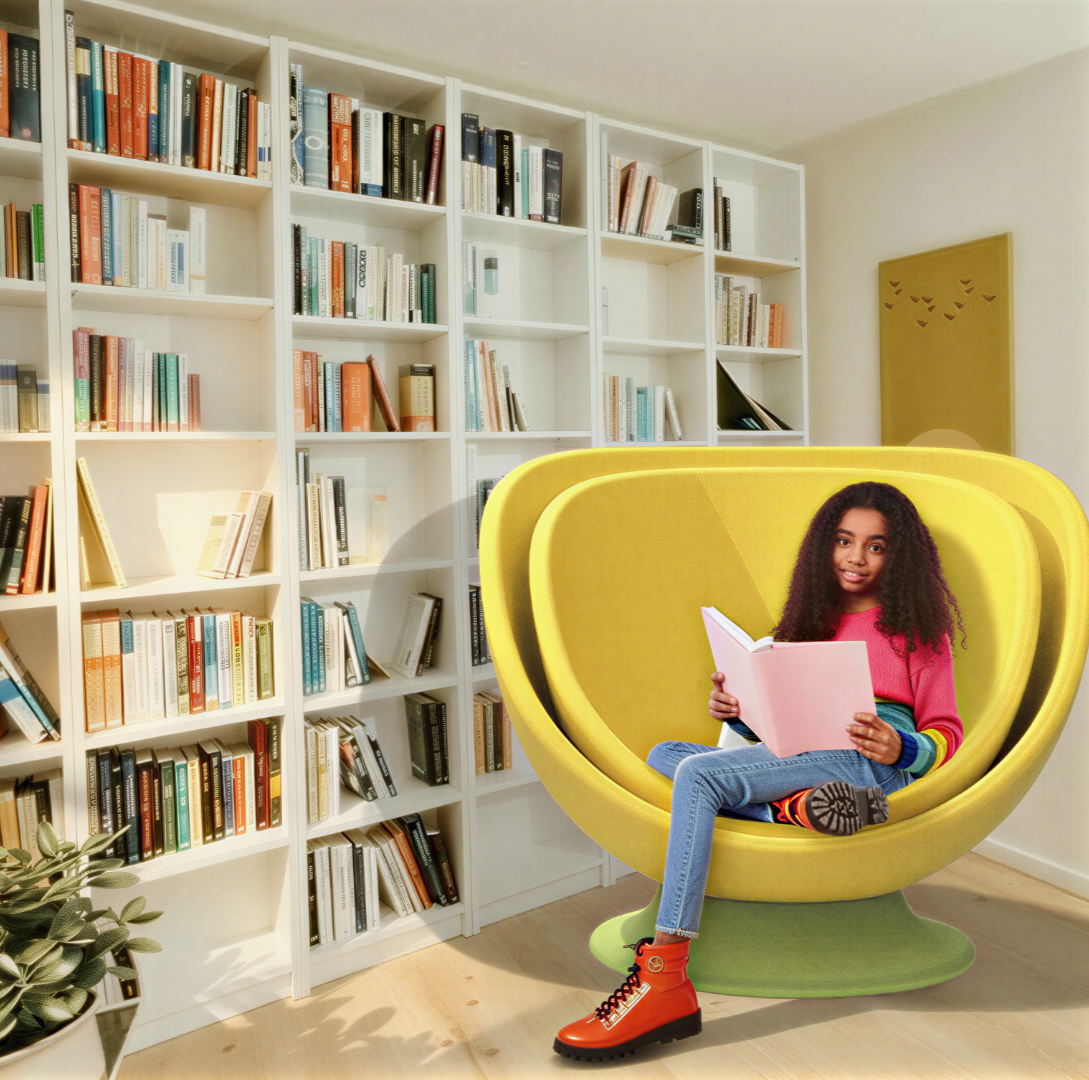
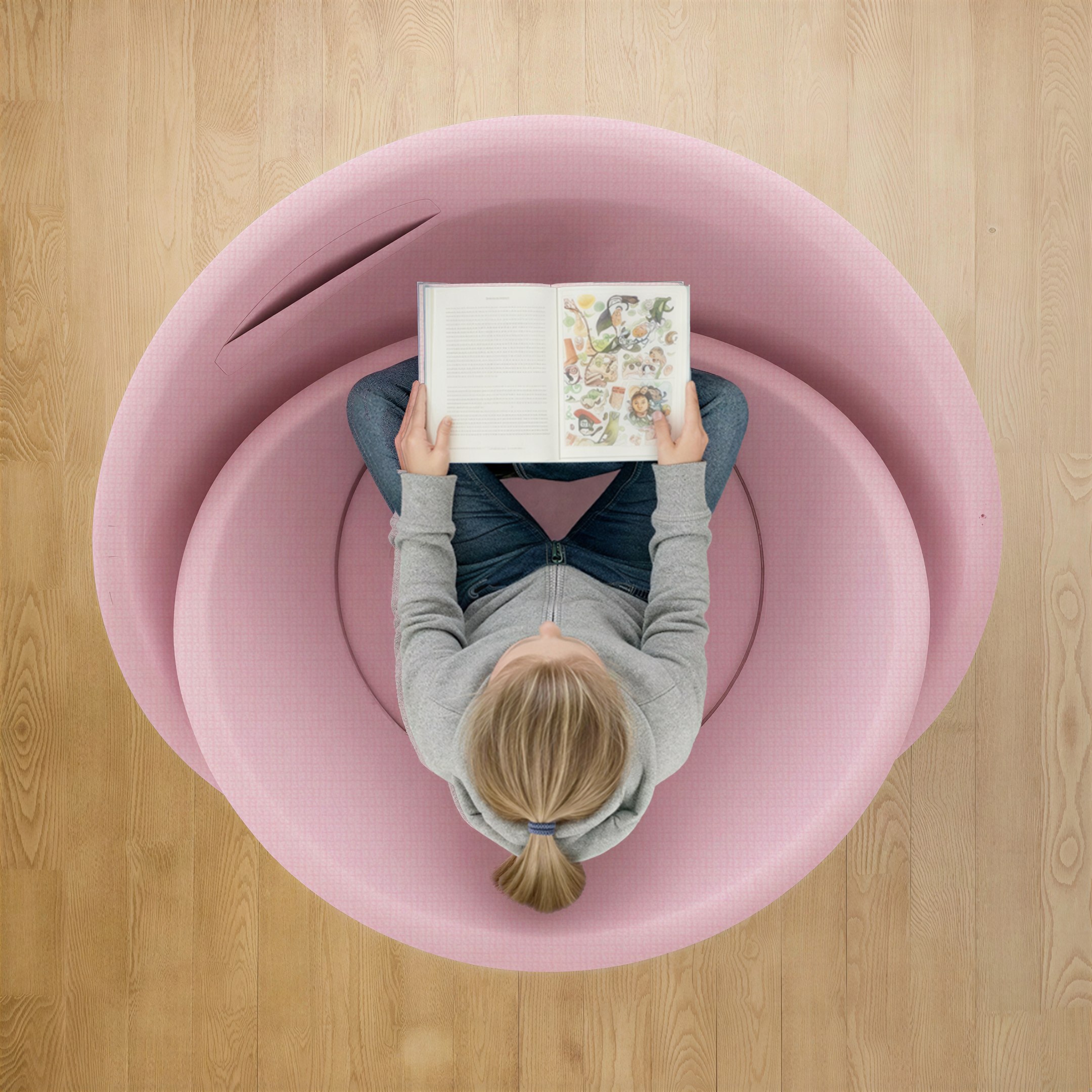
With the dropping literacy rates in America, it is more important than ever to encourage kids to read. Reading is imperative in building developmental skills, strengthening cognitive function, and inspiring creativity and imagination. Tula is a chair that aims to reduce barriers children face with reading, focusing on a designated space.
Reading frequency rates are dropping dramatically in America.
39%
of American
9-year-olds read
for fun daily in 2022.
14%
of American 13-year-olds read for fun daily in 2023.
46%
Reading has numerous benefits for children and adults. Kids who read have a more expansive vocabulary, better critical thinking skills and a higher capacity for empathy. These benefits follow them into adulthood, with regular reading lowering stress levels and reducing cognitive decline.
of American adults
did not read a
single book in 2023.
However, statistics show that reading declines as kids get older. If we aim to increase the amount of adults who read regularly, we need to encourage kids to build a habit of reading.
Interviews
To better understand the barriers to reading that kids face, I interviewed three children and their parents.

Amelia , 7 years old

Jackson, 9 years old

Emma, 9 years old
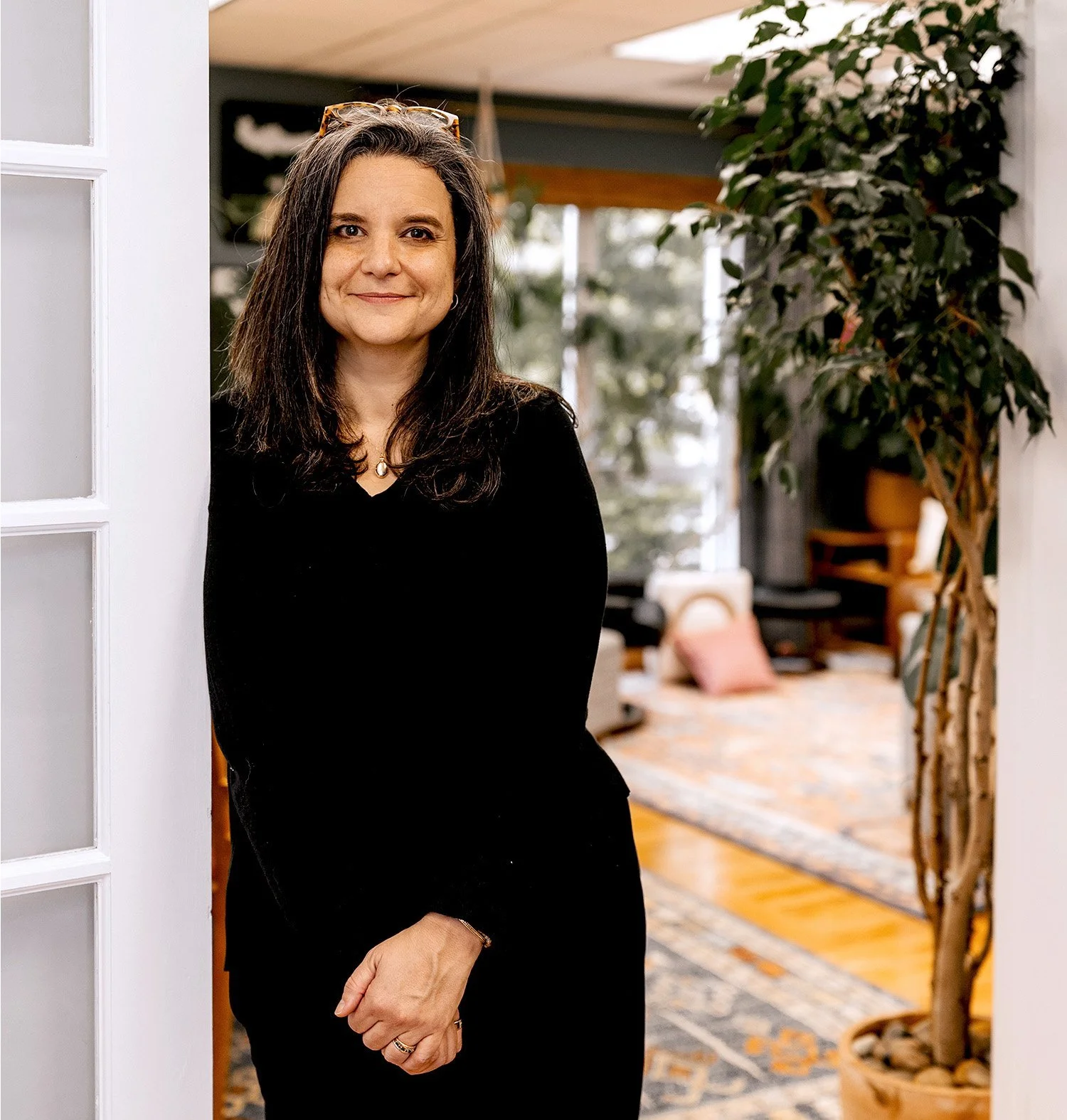
I spoke to an expert to further understand these barriers. I was also able to corroborate and verify the behavioral backing to my findings from the first round of interviews.
Expert Interview
Elisa Nebolsine, Child Psychologist and LCSW
Insights

most homes have no designated space for reading.

main distractions come from household noises.

reading falls behind other activities with option overload.

slow and self-controlled movement helps kids focus.
How might we design an
intentional space for kids to read?
My Question
Market Research
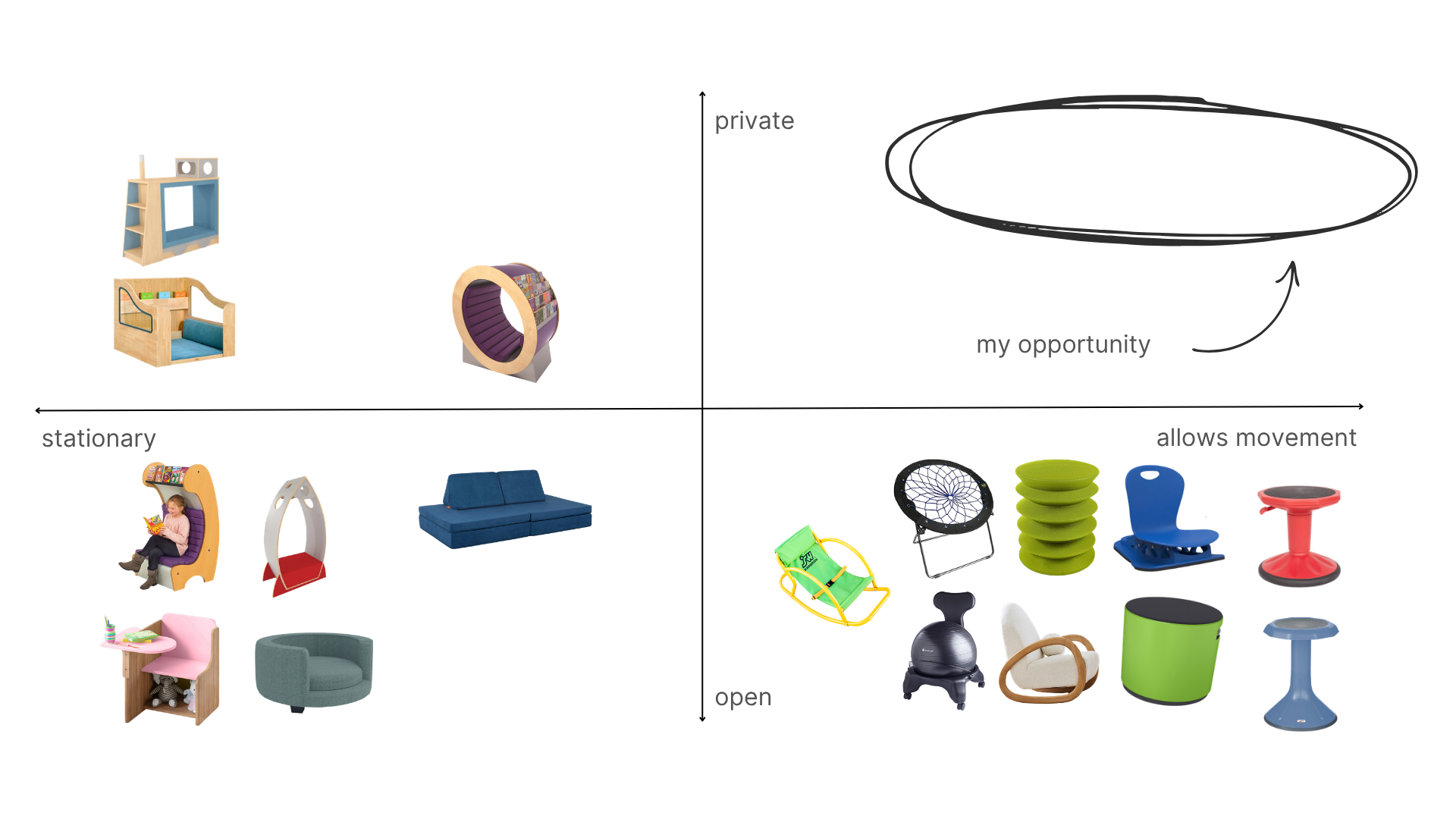
When exploring current seating options aimed at allowing movement and providing a private space, I found that well
designed chairs that allow movement exist, but they provide no privacy and can be uncomfortable for long periods of use. My opportunity is in the intersection of movement and privacy.
Ideation
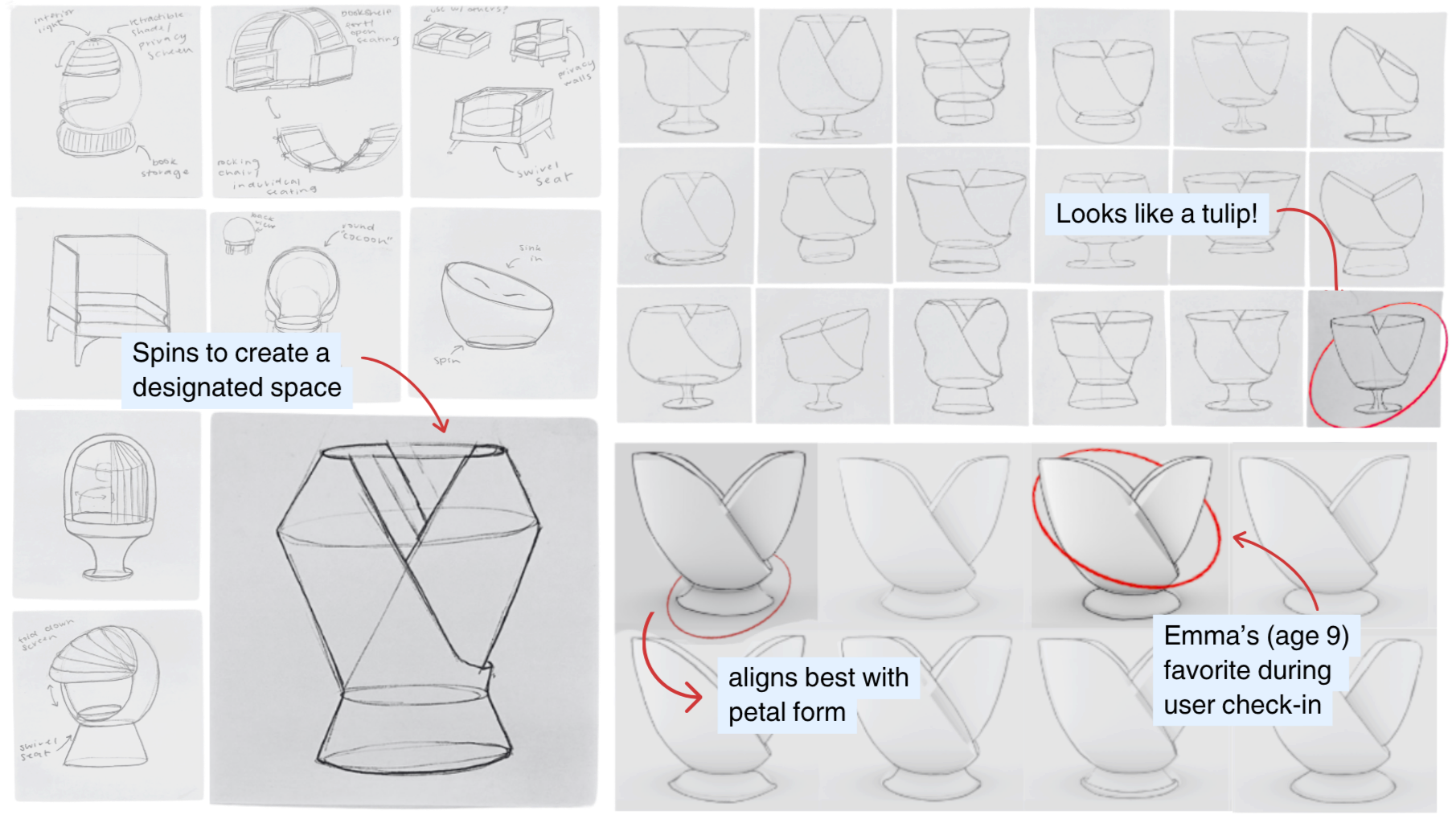
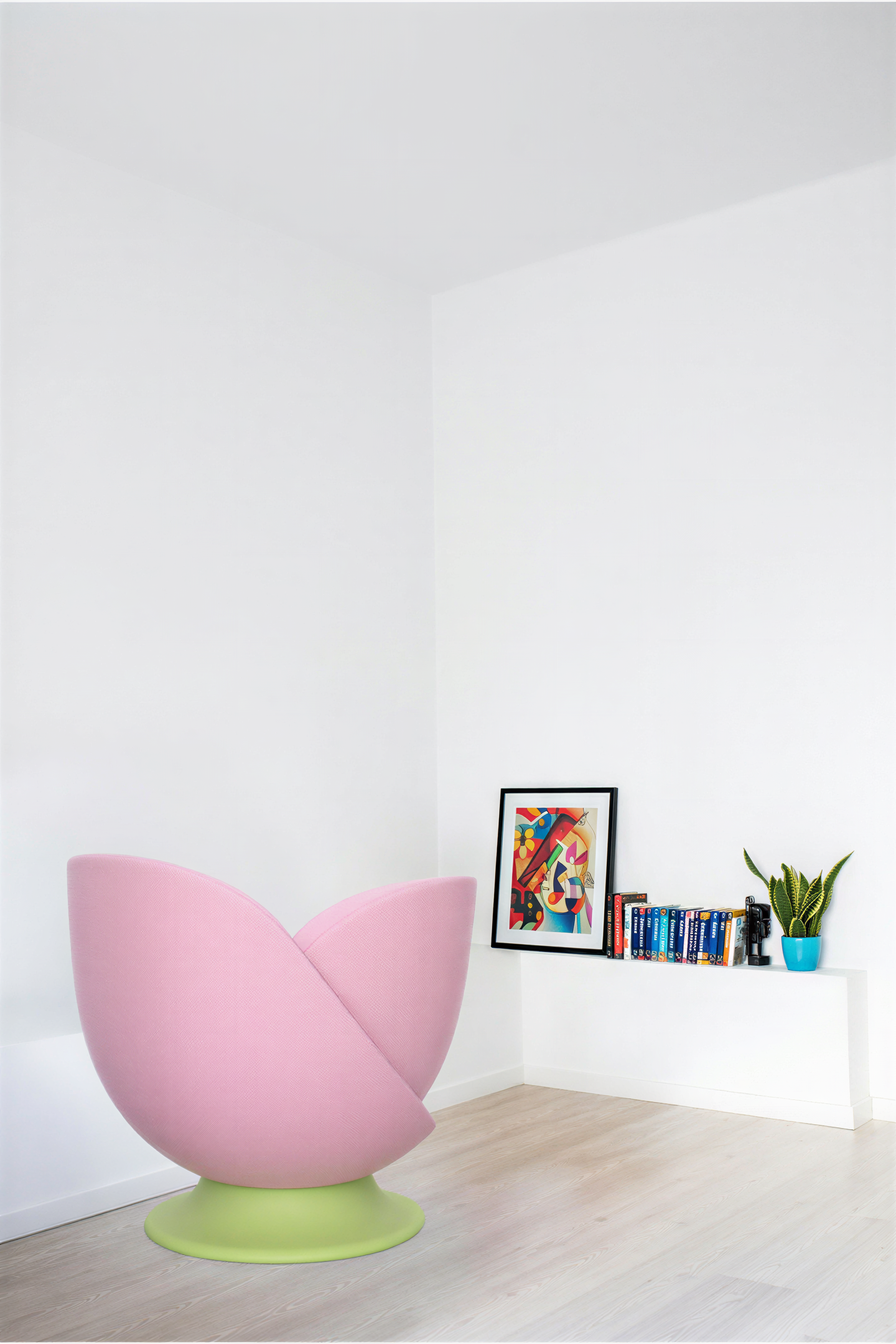
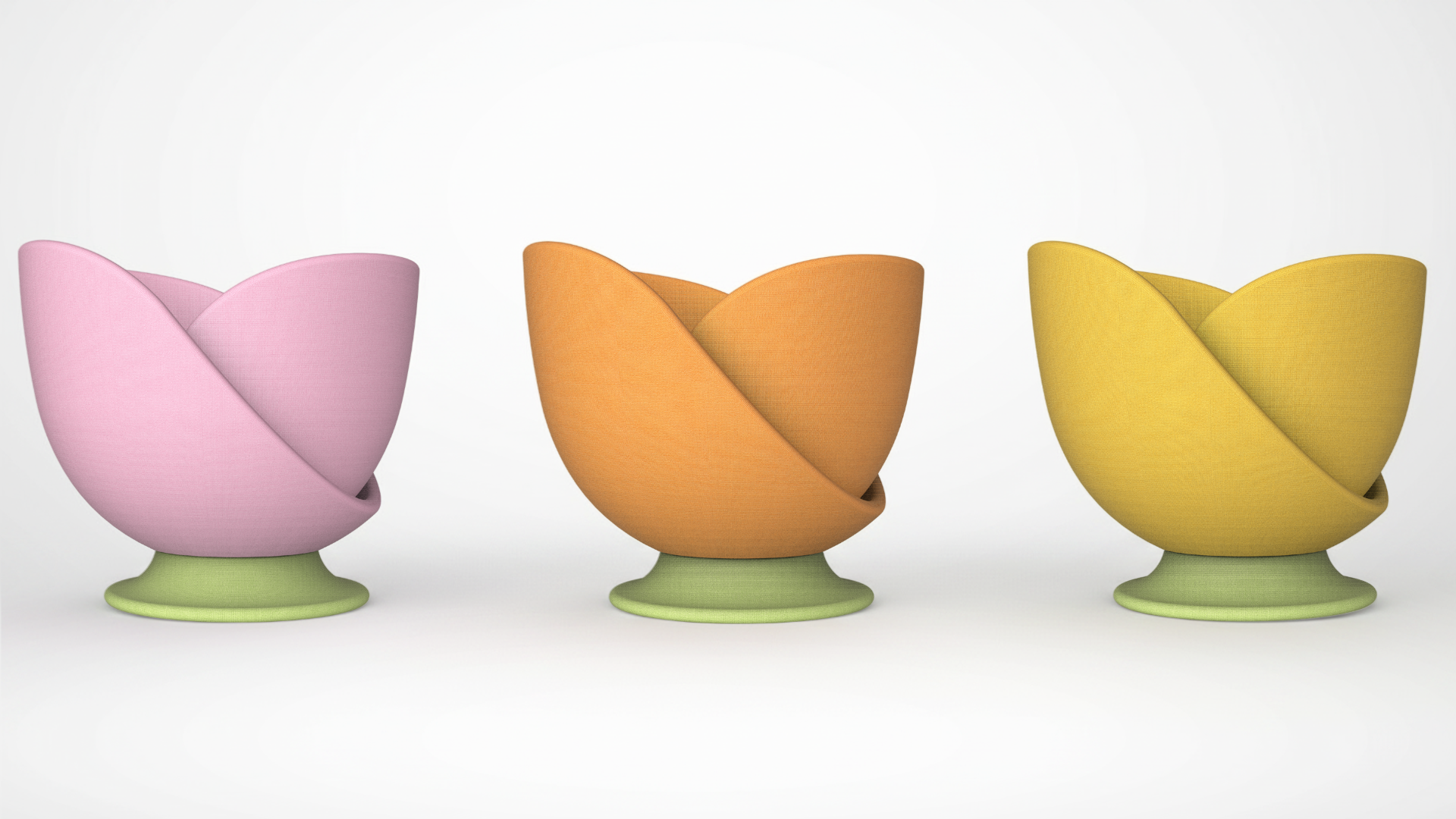
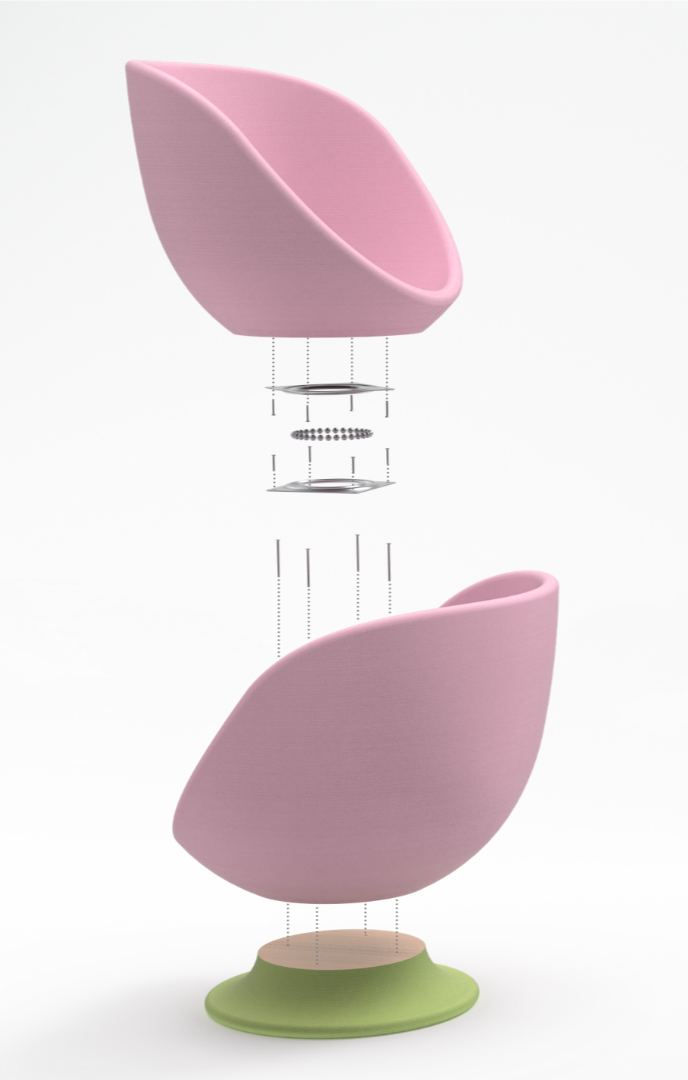
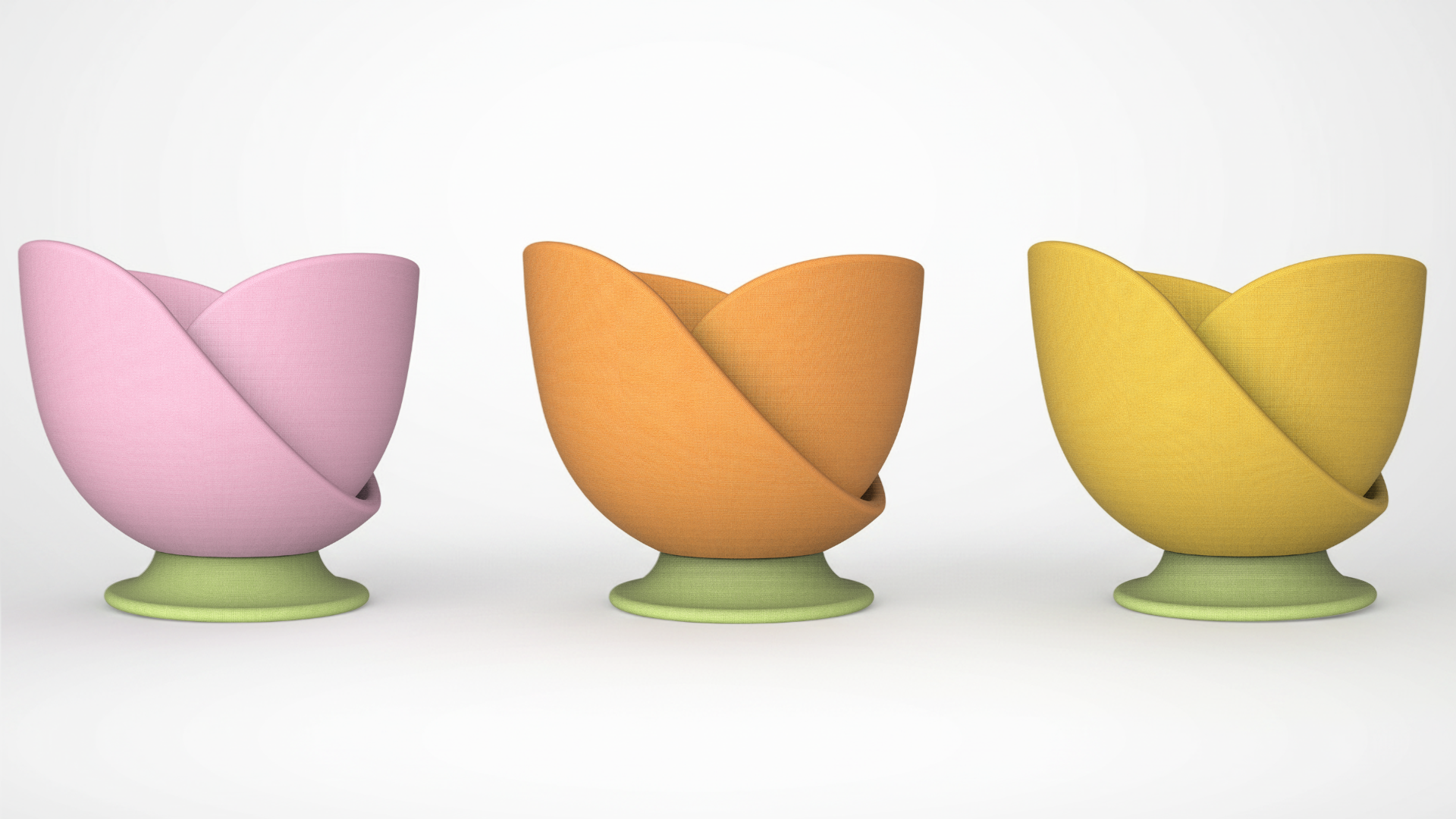
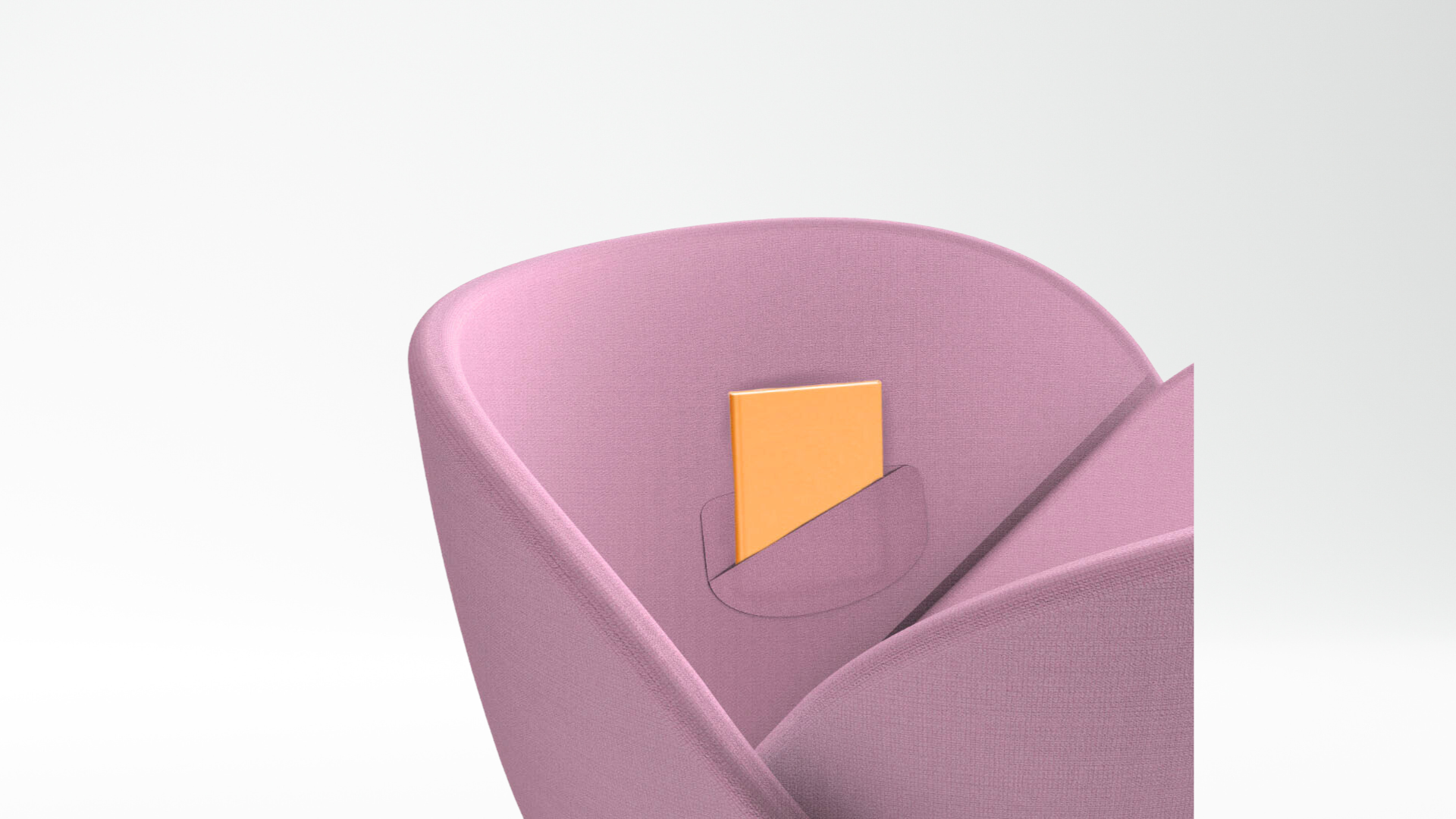
I started by exploring private chairs that incorporated an element of movement. While I was drawn to the function of the nested spinning halves, the form was too harsh for a children’s product. I explored friendlier forms that would also act as an ergonomic seat back. This is when the chair started to resemble a tulip, which is an element I took into the form refinement.
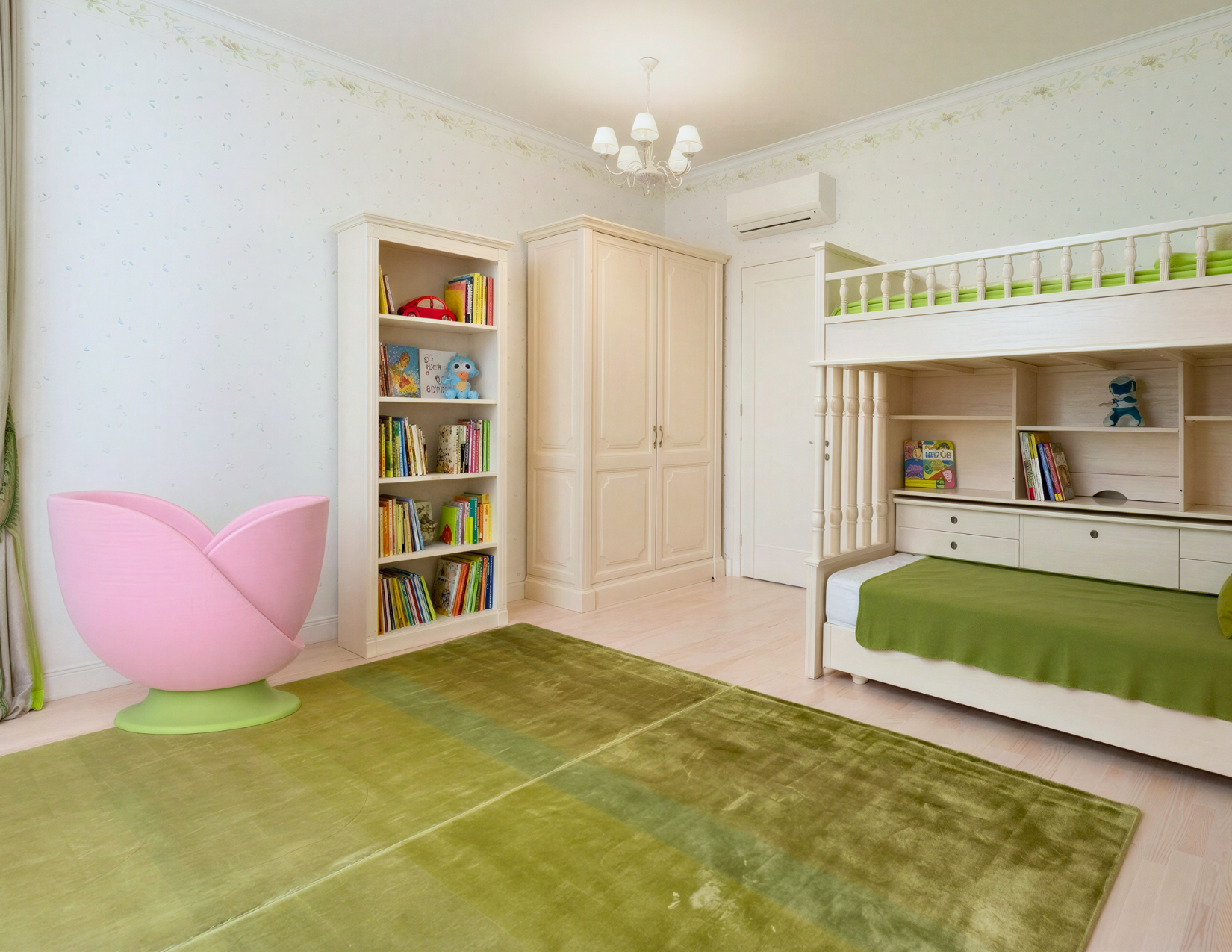
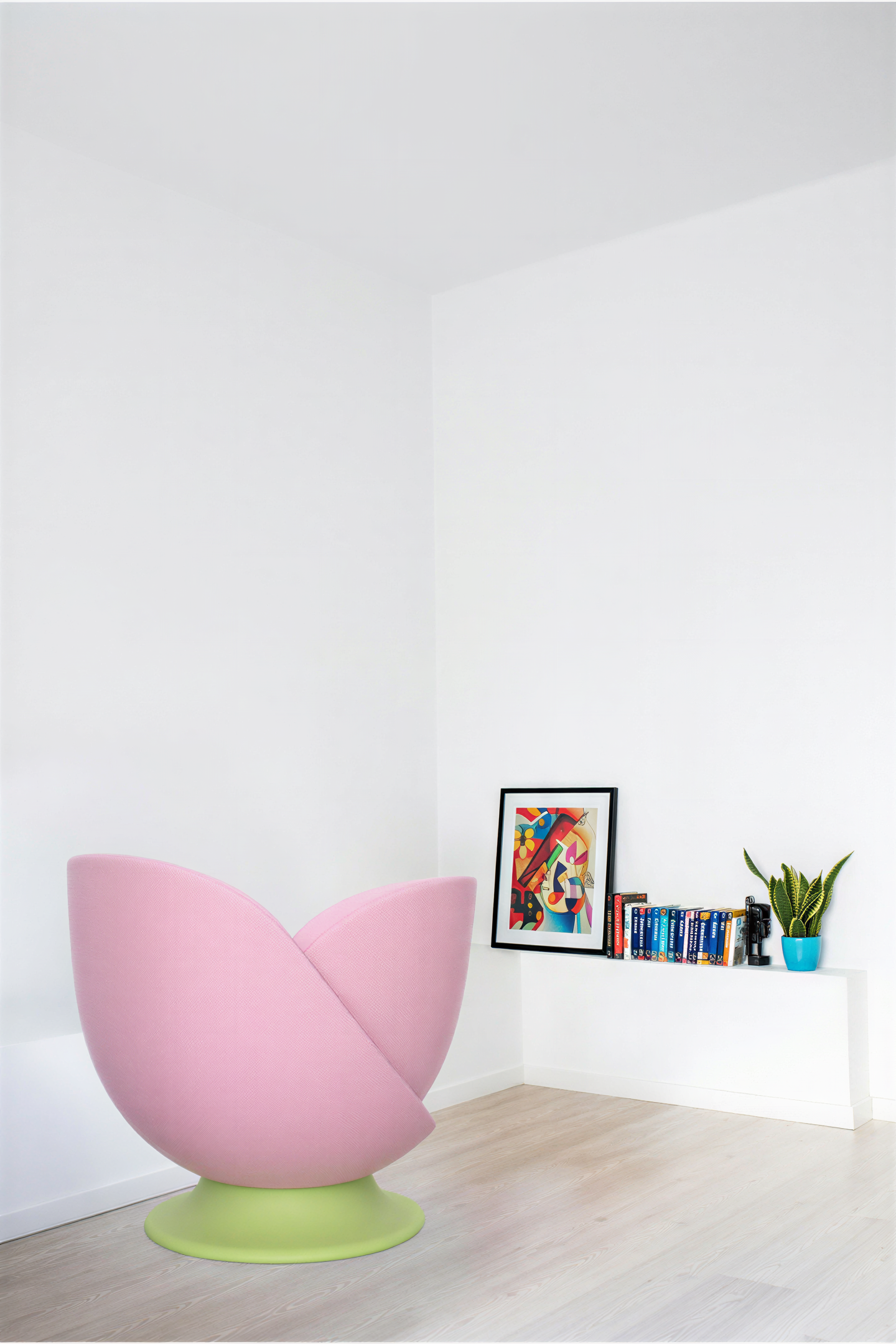
Introducing Tula
How It Works
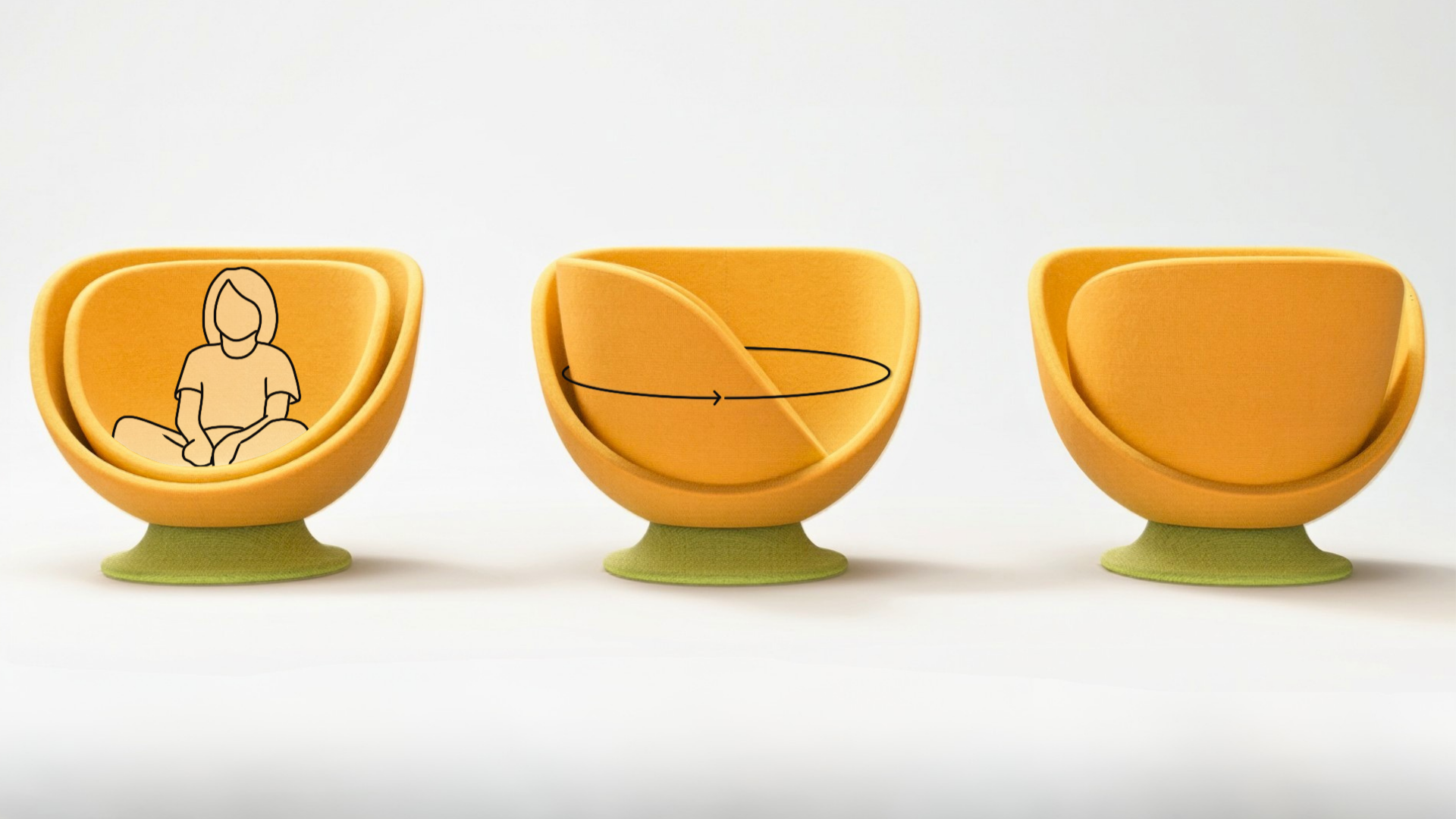
Sit in Tula in the open position.
Spin to create your reading room.
Enjoy Tula in the closed position.
Image Gallery